


Franciscan University Press
Body of Symbols
By Jean-Louis Chrétien
The Song of Songs is a song of love; it is also a song of the body, masculine and feminine, that praises its members, one by one. Over time, the vigilance of its Christian readers drew from the Song a powerful and differentiated logic and symbolism of the body. What are the powers of our body’s members, and how far does the light of the body shine?
Apr 2026

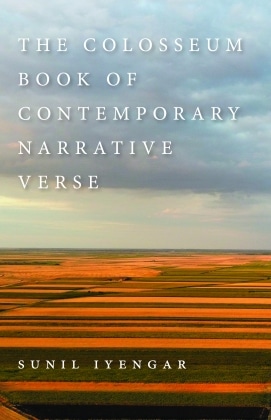
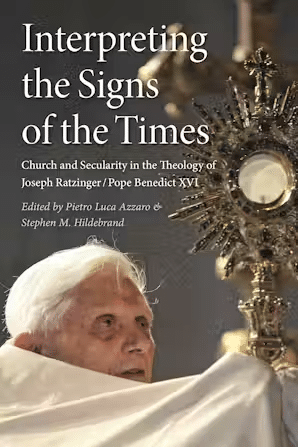
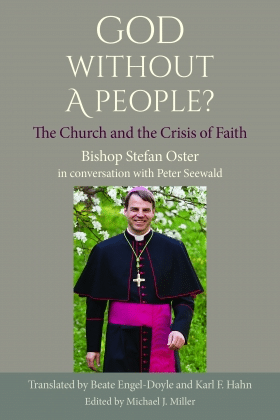
The Colosseum
A New Journal of Arts and Letters
A semi-annual journal of arts and letters that publishes new poetry, fiction, essays, and reviews.
Learn MoreMission
Franciscan University Press publishes outstanding works of scholarship and artistry in the general areas of the intersection of science and faith, the intersection of philosophy and Christian theology, Catholic studies with an emphasis on Franciscanism, and biblical theology.
Crede, intellege, dilige.
These words express the heart of Franciscan University Press, for they
sum up in many respects the aims of the Western intellectual
tradition, and in a special manner the Franciscan strands of that
tradition. Believe, understand, love. The books we publish, although
not necessarily theological in nature, acknowledge faith as a source
of understanding, expressed so well in St. Augustine’s pithy formula,
crede ut intelligas, and St. Anselm’s adaptation of it,
credo ut intelligam. Our aim is to make available outstanding
works which can move our readers to deeper understanding.
Understanding is its own end, but at the same time provides an
invitation for those who possess it to move toward greater love for
God and others.
Distributed in partnership with Catholic University of America Press
Regular Series
In addition to considering manuscripts in the more general areas of the intersection of science and faith, the intersection of philosophy and the Christian theology, Catholic studies with an emphasis on Franciscanism, and biblical theology, Franciscan University Press maintains three series.
Theandrites: Byzantine Philosophy and Christian Platonism
This is the first book series focusing solely on philosophy in Byzantium and Christian Platonism (284–1453). This series encourages one to trace Platonic ideas and terminology as it moves throughout the Eastern Roman Empire and the Byzantine Orthodox world. This tradition is an essential part of the history of ideas since the Greek texts studied in the Syriac and Arabic worlds originated in the Greek-speaking world during this time frame. Thus Syriac Christians and Arabic Muslims translated texts offered to them by Byzantine scholars and philosophers from the IV century onwards. The same is true during the Renaissance in Italy (XV century) when for the first time since the fall of the West Roman Empire in 476, the Latin-speaking world was given proper access to Greek Philosophy in the original language by Byzantine thinkers such as Bessarion (1403–1472) and George Gemistos Plethon (ca1355–1452/4). Series editors will consider monographs, edited volumes, and translations. Download our style guide here.
Send manuscripts to: [email protected]. Contact Frederick Lauritzen ([email protected]) or Sarah Klitenic Wear ([email protected]) with questions.
Religion and Society
Stephen M. Krason, JD, PhD, is the editor of the Religion and Society Series. He also serves Franciscan University as Chair of the Department of Humanities and Catholic Social Thought, Associate Director of the Veritas Center, and Professor of Political Science and Legal Studies.
The goal of this series is to examine the influence of religious considerations on the shaping of the many aspects of society, including marriage and the family, politics, law, economics, associational activity, institutional life, and social mores, and also explore the corresponding influence that social forces have on religious attitudes, practices, and institutions. Some works give particular attention to the role and activity of the Catholic Church and Catholics in society, and the way in which her witness and teachings can shape a just society and what St. John Paul II called a “civilization of love.”
To learn more about this series, contact Dr. Krason at [email protected], or 740-284-5343, or by mail at the university address.
Ex Corde Ecclesiae Mediaevalis
From the monk in the scriptorium to the friar and master in the studium to the bishop in his see, the medieval Church inspired countless authors to expound on God, the world, and salvation in Christ. The Franciscan University Press Medieval Series, Ex Corde Ecclesiae Mediaevalis, seeks to publish critical editions, translations, and monographs, especially those that illuminate the medieval diocese, classroom, and scriptorium, those that stand in the Franciscan tradition, and those that have the power to speak to the intellectual issues of our own time. Stephen Hildebrand, PhD, chair of the Franciscan University Theology Department for Franciscan University Press, also serves as the editor for this series.
Colosseum Books
Colosseum Books is a regular series of volumes of new poetry and poetry criticism that exhibit spiritual and intellectual depth and an understanding of verse as a craft guided by enduring tradition, metrical rigor, and a commitment to the well-made thing. Each Colosseum book will be published by the Franciscan University of Steubenville Press.
If you are interested in submitting your work for consideration, please review our submission guidelines.
For additional questions please contact the founder and director, James Matthew, at [email protected] .
Authors and Reviewers
How to submit your work
Franciscan University Press is happy to consider manuscript proposals. Your proposal should include the following:
- Completed Author’s Questionnaire (available for download here)
- The author’s resume or curriculum vitae
- No more than a five page description of the main argument of the manuscript and its intended audience.
- The table of contents of the manuscript
- The introduction or representative chapter of the manuscript.
- All materials and questions should be sent electronically to the Press at [email protected].
If the editors decide to have your manuscript peer reviewed, they will at that time request the full manuscript.
Information for Reviewers
Franciscan University Press is happy to receive requests from scholars interested in serving as peer reviewers for submitted manuscripts. As a small token of appreciation for the service to the profession as serving as a manuscript reviewer, we do provide a small stipend. The Reader’s Report Form (available to download here) will give you a sense of what is entailed in writing a review.
Please contact the press at [email protected] if you are interested in serving as a peer reviewer.
Director

DR. SARAH WEAR
PROFESSOR OF CLASSICS
Sarah Wear, PhD, is the current director of Franciscan University Press and is a professor of Classics at Franciscan University of Steubenville. The director is charged to work closely with the acquisitions editor to solicit manuscripts and find reviewers, to ensure that Franciscan University Press publishes only works of outstanding scholarly excellence, to maintain fidelity to the mission of the University, to administer the budget for the press, and to make final decisions on publications.
View Dr. Wear’s Faculty PageEditorial Committee
The editorial committee is composed of five Franciscan University faculty members, each of whom have a strong history of academic publishing, who, taken collectively, represent the areas of focus of the press. The editorial committee is charged with determining whether or not to submit to the director a recommendation to publish a submitted manuscript. To arrive at their recommendations, they weigh all available evidence including the outside reviews, the report of the acquisitions editor, and the manuscript itself.